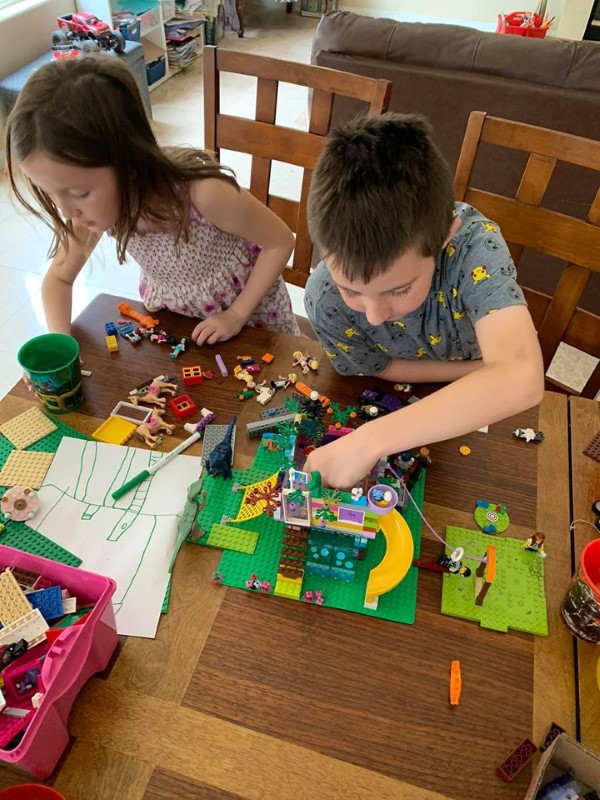
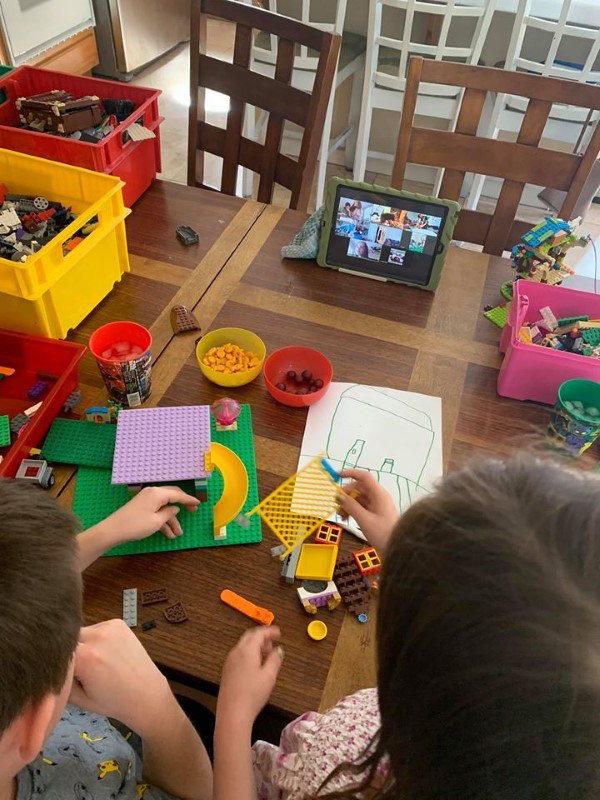
COVID has dramatically changed everyday life in a very short amount of time. LEGO competitions over Zoom with my daughters’ friends was one way to buck the lockdown and establish some normalcy. It’s fun, too!
My girls and their friends are all big fans of Lego Masters, a new television show where teams compete with one another to create incredible builds based upon a theme.
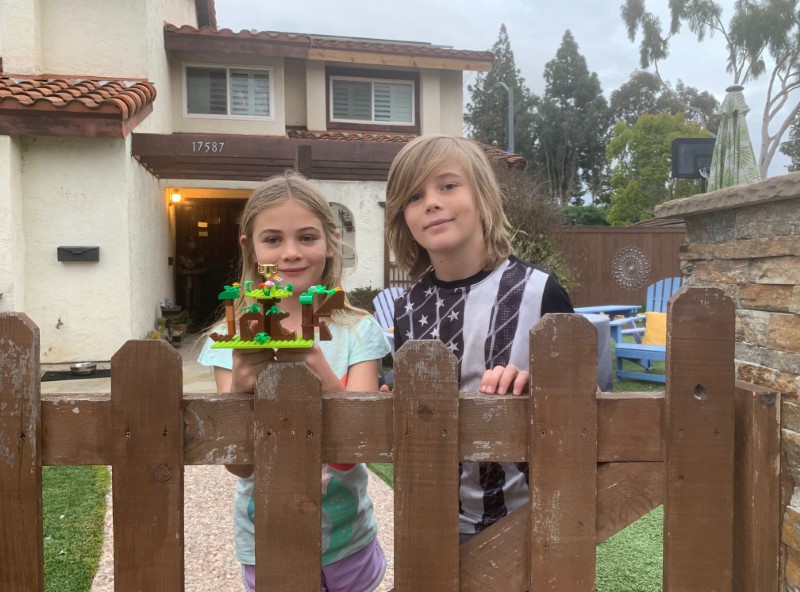
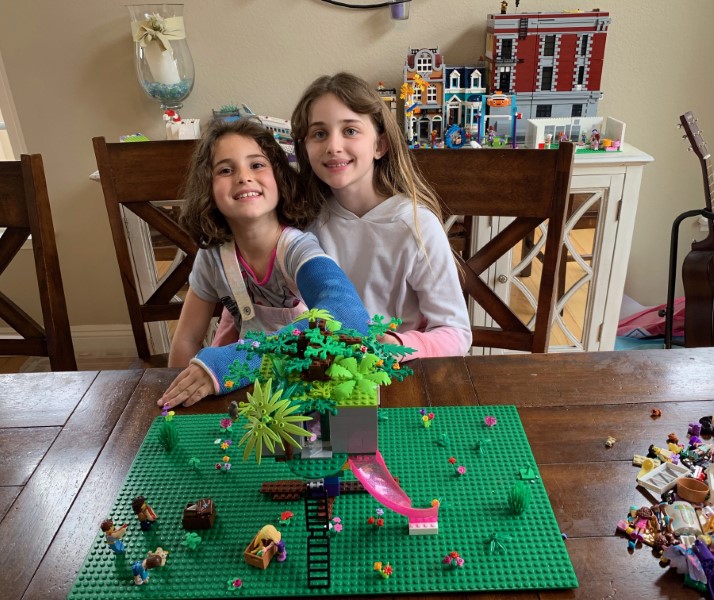
Leveraging the coronoavirus restrictions as a unique opportunity, five families participated in Episode 1 of the “Rancho Bernardo Lego Masters : Coronavirus Lockdown Edition”. Each family used Zoom running on a mobile device or laptop to teleconference so that they could participate.
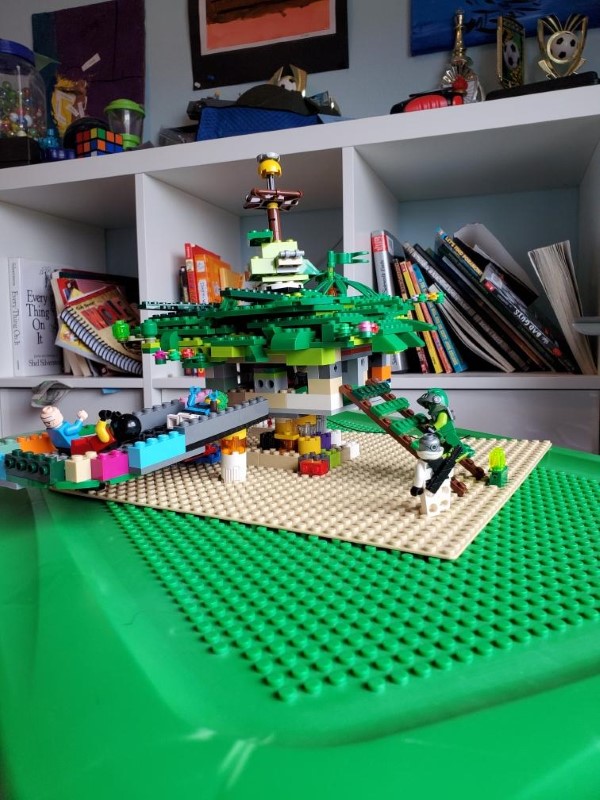
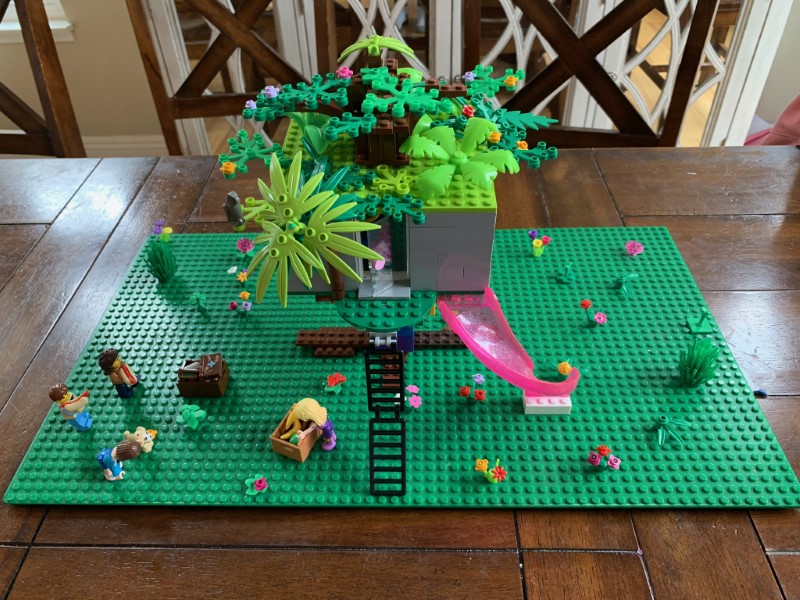
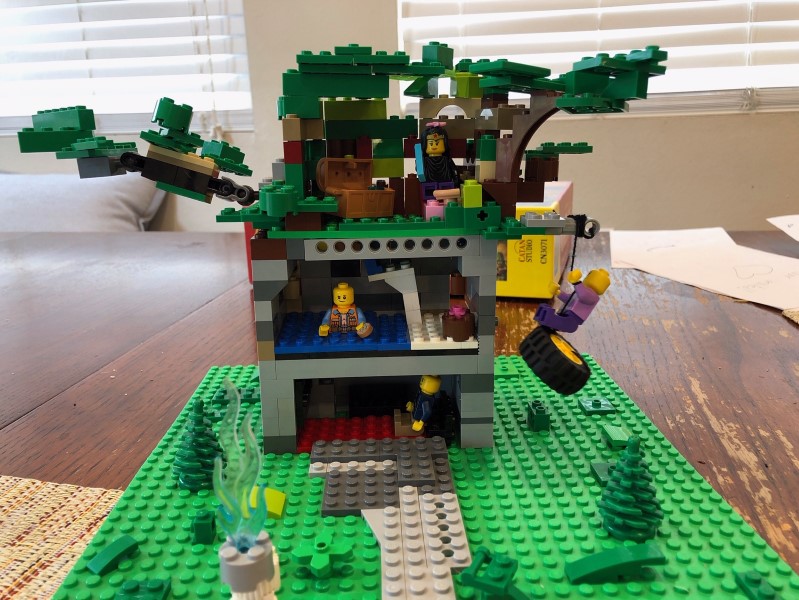
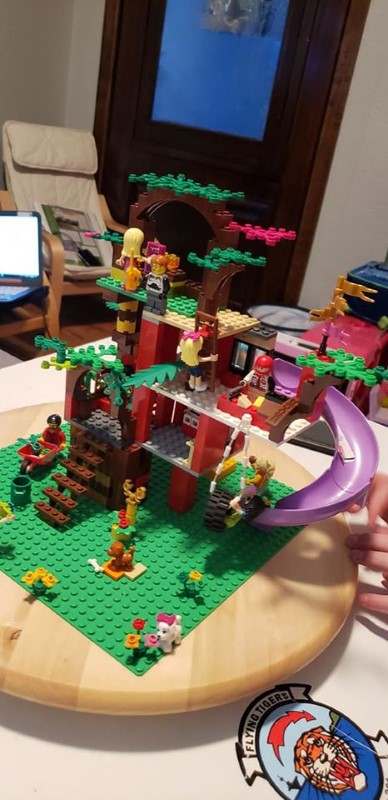
The winner of this weeks challenge, “Build the World’s Coolest Treehouse” was the Jock Family. Alexander and Kaliope won the exclusive “Rancho Bernardo Cup” with their amazing build. They will hold onto the cup until next Saturday for Episode 2.
Rules
Each family will represent a Team. A Team will be made up of one or more kids.
Each Team will need access to a device capable of running Zoom.
Each family will have two Votes. A family can only Vote for themselves once.
A Host (me) will host the Zoom meeting and be responsible for interviewing ( and muting ) the Teams throughout the challenge.
How it works
A Theme will be chosen from a hat by the Host and presented to all of the Teams.
Each Team will take5 minutesto create a Plan. A Plan is a one page paper describing about how the Team will build a Lego representing the Theme. The Plan can ( and should ) contain pictures. No building should take place during this time.
Each Team will take 1 hour to Build their Lego.
Each Team will take turns Showcasing their Build. While doing so they must describe how their Build fits the Theme.
Each family will submit two Votes for the best Build and discretely tell the Host.
The Host will tally the votes and award the winning Team the “Golden Cup”. The Golden Cup will be re-awarded with each competition.
It’s official. Toilet paper is now more valuable than gold thanks to the COVID epidemic . I never imagined to see runs on toilet paper ( pun intended ), but it’s happening.
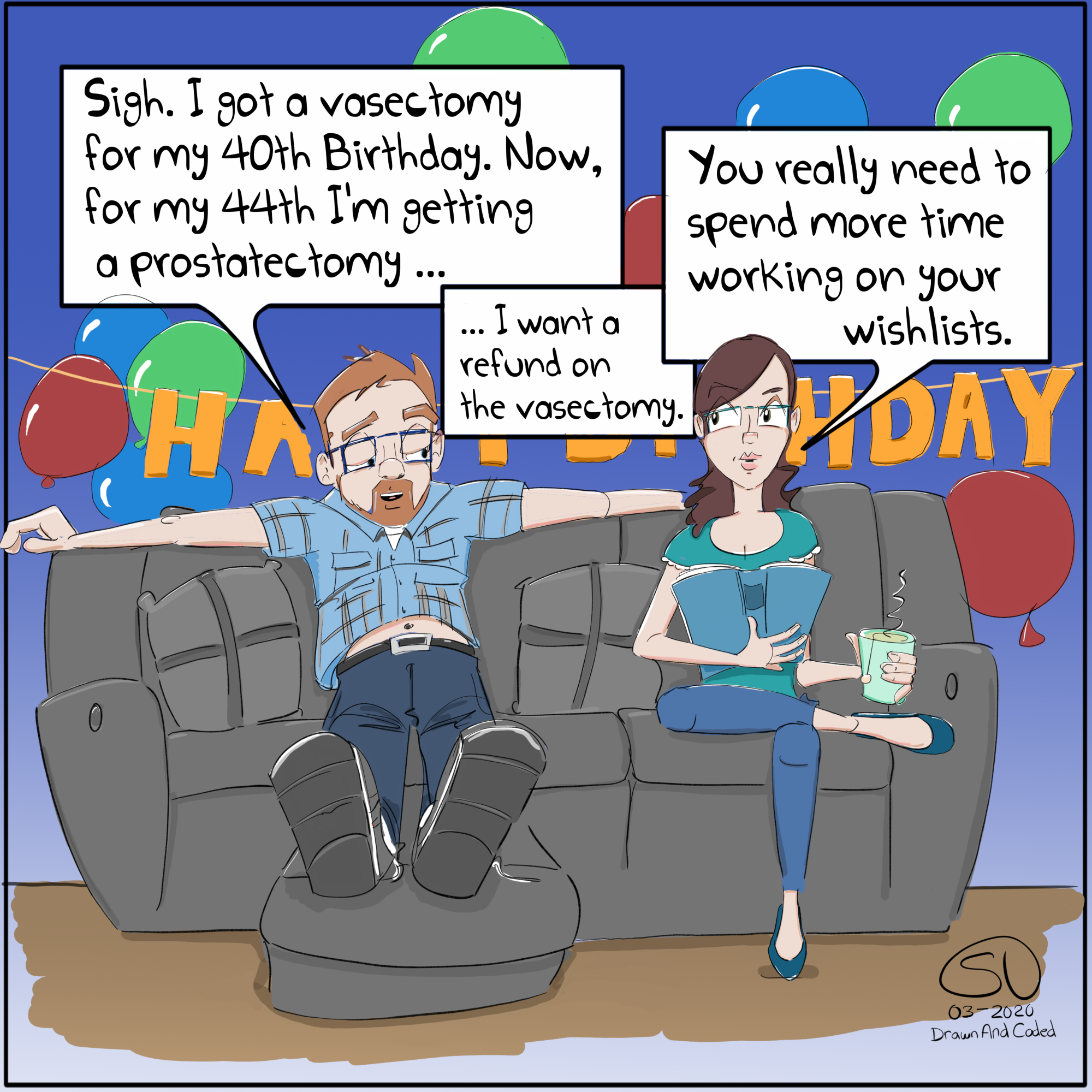
With just days to go until my prostatectomy to remove my cancerous prostate – my biggest concern? The money I wasted on a vasectomy four years prior. Either way this dad’s shop is closed for good. For more go here.
“Wait….WHAT did you just say???”, I asked, bewildered.
“Lora thought that your surgery was going to be performed through your ‘taint‘.”, Jodie replied.
I couldn’t help but laugh a little.
For those of you who are just joining me on this crazy little adventure, I was diagnosed with Stage 4 Prostate Cancer last October. Next week, on March 16th, I am scheduled to have a radical prostatectomy, or the removal of my prostate.
Now, back to Lora.
Being a good friend of mine with a great, if not odd, sense of humor, I felt like some enlightenment might be in order. A quick text exchange ensued …
Some confusion amongst friends.
“Okay, I think I set her straight”, I told Jodie, chuckling.
“By the way, you know how some people undergoing knee replacement Sharpie their knees prior to surgery to make sure the surgeon operates on the correct knee?”, she asked me, with a smirk.
“Uh, yeah…”, I replied, cautiously.
“How about we Sharpie your balls beforehand with big ‘NO’s. You know, just to be safe?”
Ha Ha.
Okay, friends and family. Here’s the thing: Although I appreciate the humor and laughs, the comedic doors are closing quickly. Post surgery, a belly laugh will likely make me pee my pants or, at worst, bust a stitch.
Who am I kidding?
Roast away.
I love you guys. I’ll just have to stock up on pads and diapers …
Soap Up
“I’m pretty sure I just bought a 200 dollar bottle of soap.”, I told Jodie while leaving a very quick pre-op appointment with Dr. Christoper Kane’s nurse practitioner.
His nurse had handed me a large bottle of pink soap. It looked alarmingly like the same stuff that dispenses from a gas station restroom.
“The insurance will probably pay for it…”, Jodie replied.
I haven’t had major surgery before so I was a little surprised that an intensive bathing regime was in order beforehand. I was told to shower using the soap twice the day before surgery and once on the day of the surgery. Each of those times I also need to lather, rinse and repeat. She also instructed me to make sure my sheets were freshly washed as well as the bath towels and any clothes I will wear the day of surgery.
“My surgery is at 5:30 AM. I’ll have to wake up even earlier to hose down!”, I complained.
“….and you’ll be sleeping the rest of the day.”, she replied.
Good point. I’ll be sleeping under general anesthesia. Jodie, on the other hand, will be doing anything but that.
Sigh.
The Meal Train has left the station
“This is addressed to you…”, I told Jodie, slapping down a fat envelope addressed to her.
She cut open the envelope to reveal several gift cards for The Loving Hut, one of our favorite vegan restaurants.
“Gift cards?”, she looked up at me, “But from who?”
A phone call later revealed that the Meal Train had left the station and Jodie’s best friend from High School, Jenny and her husband Adam had decided to take a ride. Jayme, Jodie’s twin-sister, had set up the Meal Train to help us out after my surgery. I had never heard of Meal Trains prior to having kids. Jodie introduced them to me as part of her Mom’s Club whereas mom’s would help out other “new” moms with newborns in the same manner. Jodie was the helping hands coordinator for her group for a long time and participated in a lot of them.
Later that day my Mom and Aunt stopped by and delivered more gift cards for Panera Bread. They too, were “on board” the train.
I’m honestly at a loss of words to describe how grateful I am, not just for the meals, but for the love and support in general. Thank you.
Let’s do this thing
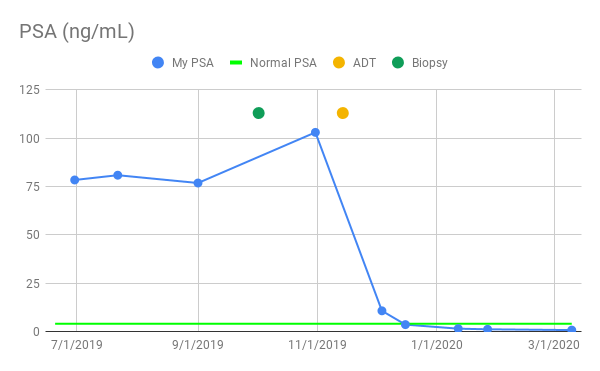
My PSA score is still dropping after four months of hormone therapy. As of this week it has plummeted to .74 which is well within the normal range for PSA screening. Next week my radical prostatectomy, if successful, should bring that number even lower – ideally to undetectable levels.
I’ve been asked several times over the last few days if I am ready.
When surgery was first proposed immediately following my diagnosis my answer would have been a resounding, “Hell no!” Since then I’ve learned a lot and have had the chance to talk to a lot of people. My favorite advice, which I have taken to heart, was to train for surgery like a runner does a marathon.
“If you train well enough you will succeed.”, I was told.
Today, aside from having cancer, I’m probably the healthiest I have been in my entire life. I’ve been exercising daily, eating healthy, and reigning in my stress and anxiety. Does that make me ready? I don’t know about ready, but I am prepared as I’ll ever be. Fire the starting pistol and let’s get this thing started already….
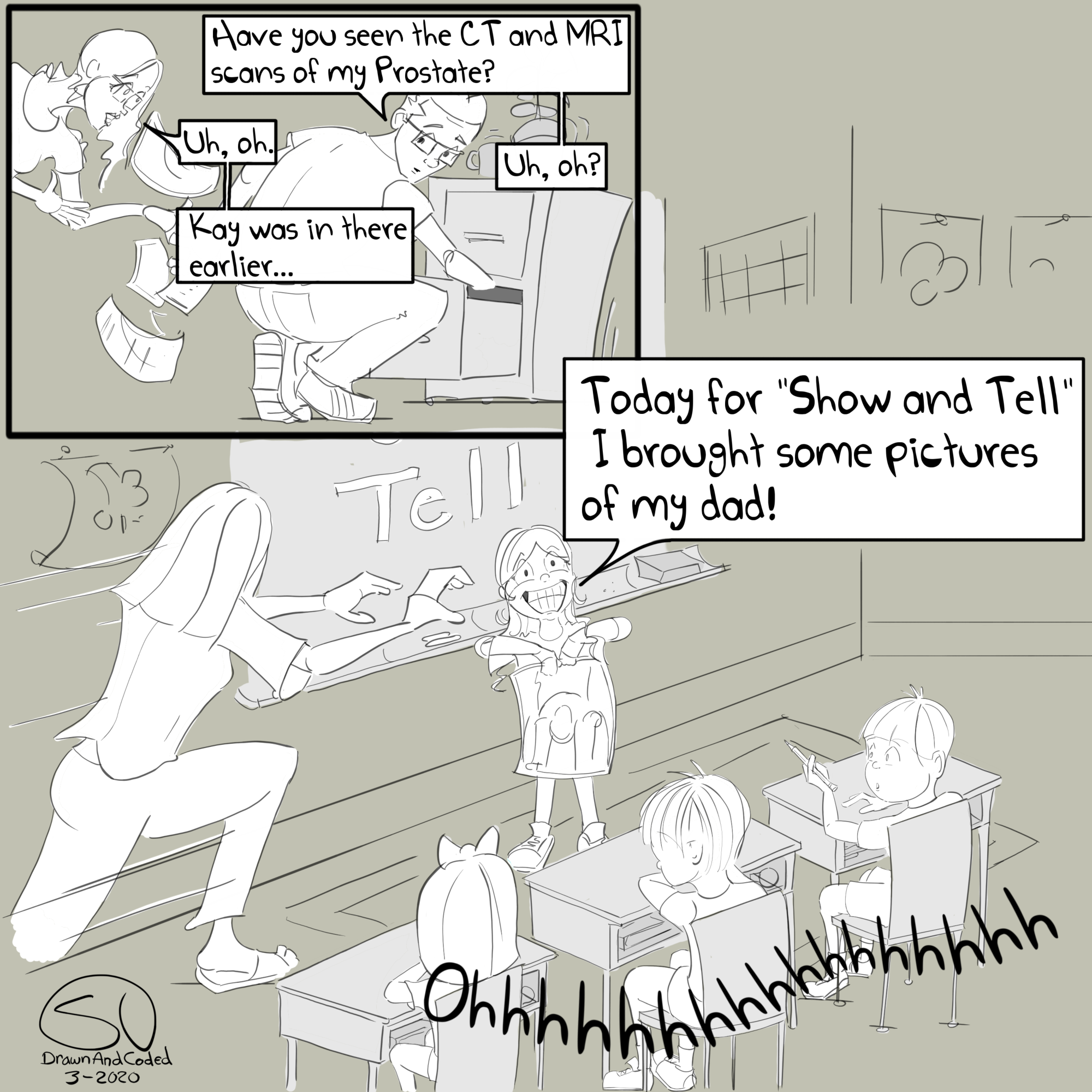
One thing I have learned after getting diagnosed with cancer is to request copies of all your scans. The scans will come in handy if you ever need a second opinion from a different hospital. Just be vary careful about securing them. For more go here.
“Jodie, what the heck does this mean?”, I grumbled.
Jodie peered over my shoulder at the report for the CT scan that was performed on me two weeks prior. The report indicated, as my surgeon Dr. Kane had told us during my last appointment, that my prostate and compromised lymph node were now normal-sized. However, a little further down it read this :
Significant stool burden throughout the entire colon, indicating severe constipation.
SMALL & LARGE BOWEL: Significant stool burden throughout the colon.
“I think it means you were full of food.”, she replied.
“Well, YES. I mean, they had me fast for four hours ahead of time, so I crammed as much food in as I could.”
Jodie shrugged.
“And I am NOT constipated!”, I said with, in retrospect, a little too much bravado. I fired a quick email off to Dr. Stewart pleading my case and forgot all about it.
Fast forward a week.
Jodie and I were, once again, waiting in an exam room at UCSD’s Koman Outpatient Facility. We didn’t have to wait long before Dr. Stewart burst through the door.
“Oh my God, are you okay ?!?”
“Huh? What? Yeah, I’m fine, wh…”, I stuttered.
“I read your CT scan report and it sounds like you were very full and constipa ( smirking ) ….”
Dr. Stewart couldn’t keep it together and started laughing. In a prior post I wrote about doctors having to walk a fine line when using humor with their patients. Dr. Stewart nailed it this time. Jodie and I started laughing with him.
“Radiologists often point out things like this. I’ve looked at your scans and everything looks normal to me.”, he reassured me.
“Can you at least see what I ate in the scans?”, I asked, half jokingly.
Chuckling, Dr. Stewart brought up my scans on his computer and, although I thought they were as indecipherable as a rorschach test, he did his best to show me my full stomach and colon.
“So, how are you doing?”, he asked.
“Well, I’ve been on Lupron and Zytiga for over three months now.”, I told him, “The hot flashes are getting better, but I feel like I have had a lot less energy.”
“That’s because when you first started therapy it was a new challenge, but now that you’re in the thick of it, the honeymoon period is ov…..”, Dr. Stewart started.
“I’d hardly call it a honeymoon!”, I interrupted, smiling.
“Good point.”, Dr. Stewart chuckled, “Anything else?”
“Well, I got the paperwork for my radical prostatectomy next month, and I am a little relieved that I do not have to do an enema.”, I replied. In my opinion, food goes in the mouth and comes out the bottom, the reverse is never a good thing.
“Let’s talk about your surgery”, Dr. Stewart said.
He then told me that I would remain on Lupron during surgery, but I would take a two week break from Zytiga. When I asked him why, he told me that there’s not a lot of precedent for men being on Zytiga while having a radical prostatectomy. I would, however, remain on Prednisone the entire time. A week after surgery, the same day that I was to get my catheter removed, I would get my second shot of Lupron. I briefly envisioned how that day would go, and quickly changed channels. One step at a time, right?
“After surgery should my PSA be zero?”, I asked. PSA measures prostate inflammation. No prostate, no PSA.
“Yes.”, said Dr. Stewart.
“And if it’s not?”
Dr. Stewart started talking about radiation and I stopped him.
“For now, let’s just assume that the surgery is going to work and everything is going to be okay. I really don’t want to talk about radiation when I won’t really know if the surgery worked until I’m off of hormone therapy.”, I interrupted.
Hormone therapy starves prostate cancer cells. It’s why my PSA has dropped from 103 to 1.14 while I have been on it. As I am to remain on hormone therapy for up to two years, worrying about any residual cancer after surgery seemed premature.
Next, we discussed my genetic screening results.
Since being treated by Dr. Stewart I have had two genetic screening tests performed, the first by Tempus and the second by Invitae . These tests scan for BRCA1, BRCA2, and HOXB13 mutations in your DNA. While having these mutations greatly increase your chance of getting Breast, Ovarian, or Prostate Cancer, the mutations, being as common as they are, have been targeted by pharmaceutical companies in the development of newer, very effective medications, such as Lynparza.
Given my family history of cancer, Dr. Stewart thought that I might have had one of these mutations, but the results from both companies came back negative.
“Is that good or bad?”, I asked him.
“It’s neither good nor bad. It is what it is.”, Dr. Stewart replied.
I was almost disappointed. Having a known mutation would have likely made me an easier target for therapies. But then Jodie snapped me out of it.
“It’s good! It means that our daughters aren’t carriers, either.”, she said.
Thanks, honey. Very good point.
“Any other questions?”, Dr. Stewart asked.
I shook my head no which, in reality, was far from the truth. I had lots of questions, but realizing that not all of them had answers and that our appointment was winding down, I relented.
As it turns out I won’t see Dr. Stewart again for over two-and-a-half months. He explained that, after surgery, my cancer treatments will quickly become a routine of hormone therapy, bloodwork, and PSA tests for the next year or so. I understood, but I will miss our monthly pow-wows nonetheless. Dr. Stewart is a fantastic doctor. As he left the room I held up my arms in a mock embrace and smiled. He smiled back and closed the door behind him.
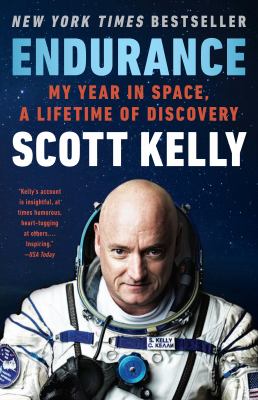
“Uh, noooooo…”, I replied while pushing myself up from my pillow, interested.
“Yeah, he had surgery to get his prostate removed and was allowed to return to space.”, she said.
“Really?”, I asked excitedly.
“Yeah, I really think you should read this book, You’d enjoy it.”, she replied.
“I think I will…”.
Jodie was right, I enjoyed it a lot.
It’s hard not to like Scott Kelly, a rebellious, unmotivated kid who, after reading a book, “The Right Stuff”, by Tom Wolfe, hunkered down and fulfills his ultimate dream of becoming an astronaut. The lessons he learns along the way help him thrive later during his last mission, a year-long stay on the International Space Station (IIS) to measure the effects of long-term space travel.
As it turns out living in space is no pleasure cruise. Scott and his crew mates spend a lot of time fixing things which on earth, would be trivial, but in space are detrimental to survival. For example, my house has three toilets, and a plumber is at my beck and call; not so on the IIS where a malfunctioning toilet can be life threatening. Furthermore, everything needs to be flown in ( or out ), and the method of shipment, space flight, isn’t always reliable. Food, oxygen, – even garbage are at the mercy of successful launches.
Scott survives by what he calls “compartmentalization”, or the ability to focus on the most pertinent problem while ( temporarily ) putting aside the rest. Compartmentalization allowed him to focus during a strenuous spacewalk while numerous technical problems and the universe itself ( in the form of an enormous looming earth above him ) were both vying for his attention. It’s definitely a valuable life skill, and not just one for astronauts.
From his vantage point on the IIS, Scott concludes that the only thing protecting earth and its inhabitants from the harshness of space is a thin veneer of atmosphere. He makes it clear that life is both fragile and precious and that, aside from a handful of people of the IIS, we really only have one home. After reading about the diverse crews that Scott works with on the IIS, I get the impression that aside from language barriers and political posturing on earth, it’s important to respect everyone as you might not know when your life depends on them.
Lastly, on a personal level I am happy to see that there is life after cancer – even for an astronaut. As Jodie had told me, Scott Kelly was diagnosed with aggressive prostate cancer at age 43 and, after surgery to have it removed, was permitted to return to space – twice. This is incredibly reassuring to me given that I am scheduled to have the same surgery in a few short weeks. If Scott Kelly, the astronaut, can ride a rocket into space after having his prostate removed, I can surely return to my own ( much more modest ) life as well.
Initially, I didn’t handle the news too well. I reached out and sobbed to my family and friends. I dismissed work and contemplated quitting. I checked and rechecked my life insurance policy and my will.
So much for staying calm.
After about two weeks of freaking out my friends, my family, and myself, I woke up one morning, looked at the sunrise from my bedroom window, and realized that I was still very much alive. Death, apparently, had better things to do. I realized that I did, too.
I started by making my bed.
Later that day, while at work, I searched on YouTube for “Inspiring Cancer Stories”. I arbitrarily clicked on a link to a speech by Jen Sotham, a writer and musician who lived in New York with Stage 4 Melanoma. Her entire speech was fantastic, however at 12 minutes and 15 seconds she summed it up for me in one sentence.
She said, “This disease might kill me, but you will never ever catch me dying.”
That hit home.
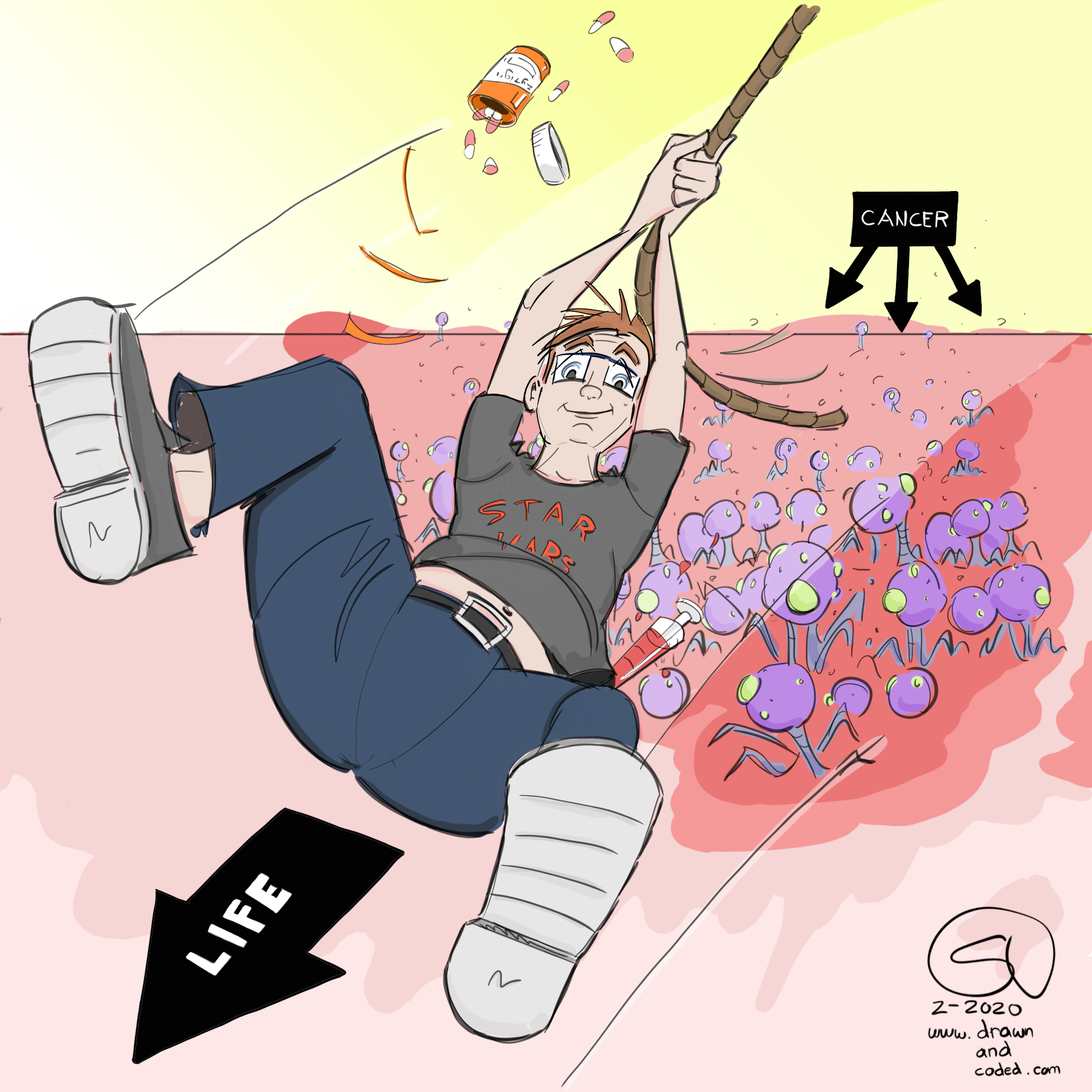
Yes, cancer is serious. Yes, if it’s not cured it’s terminal. But life is terminal. Rather than live each day hanging by a thread, I decided that I’d rather swing from it instead.
Yes, cancer is serious. Yes, if it’s not cured it’s terminal. But life is terminal. Rather than live each day hanging by a thread, I decided that I’d rather swing from it instead. For more go here.
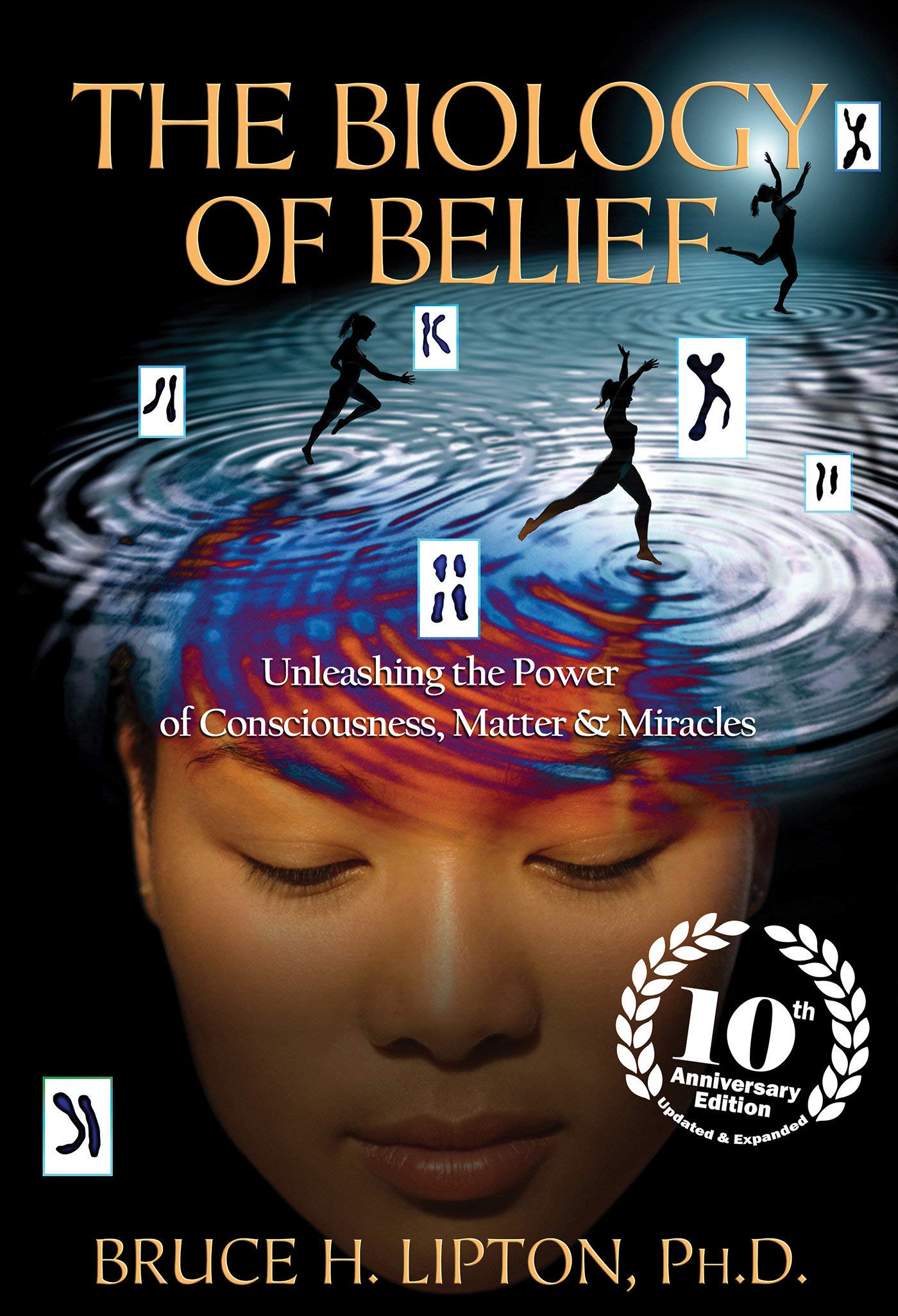
As it turns out, psychological health has a dramatic effect on cancer. There are over 1,000 completed or in progress clinical studies that have investigated this relationship. Stress and anxiety can arguably increase your risk of cancer, or encourage it to metastasize. As cancer inevitably causes stress, and stress, cancer, I quickly realized that I needed to do something to stop the vicious circle.
Over the last year, with the help of my friends, family, doctors, therapists, and a whole bunch of books I have compiled a list of strategies, or coping mechanisms which have made living with cancer easier for me. Now, I would like to share these with you…
Know a few of your favorite things
We’ve been having family movie night at the Vandervort household lately. It typically starts with Jodie or I selecting a favorite from our youth, presenting it to the kids, getting shot down with scathing remarks, and then, finally, forcing them to watch it anyway else they lose their electronic devices. So, over the holidays we watched “The Sound of Music”. During the first half of the movie, Julie Andrews sings a song to the Von Trapp children to help cheer them up during a thunderstorm. The song is called “My Favorite Things”, and it lists several things that Julie’s character, Maria, thinks of when she is feeling scared or sad. Even if you haven’t seen the movie, you’ve probably heard the song. Our kids loved the scene and promptly fell asleep after it ended.
The following morning Jodie and I were awoken by Julie Andrews belting out “My Favorite Things” on our downstairs Google Home. Instead of making me angry, the song brought a smile to my face.
What I’ve realized is that, when dealing with cancer, what makes me happy isn’t always obvious. I tend to lose sight of it amidst all of the chaos going on. Now, like Maria, I keep a list to remind me. When I’m feeling down, or scared, or depressed I look at my list, pick something off of it to do, and generally, it cheers me up.
We may like different things, but Julie Andrews make a good point.
Be in the moment
This year for our New Year’s resolution Jodie and I both decided to reduce the amount of time we spend on our mobile phones, particularly at dinner time. We both realized that it was not only distracting, but a bad influence on the kids. Now we holster our phones at dinner and try to be in the moment.
When dealing with cancer my mind is anything but in the moment. I find myself constantly worrying about the future, scrutinizing the past for answers, or just letting my mind wander aimlessly.
To help me stay in the moment I do four things :
I remind myself that the future is unpredictable. I’ve realized that, given the chance, my mind will create the most outrageous scenarios, none of which will likely come true.
I remind myself that the past can’t be changed. What’s done is done. Learn from it, don’t fret over it.
When necessary I’ve learned to use a simple timer to limit the amount of time that I have to focus on a particularly stressful task. After, say, 45 minutes I’ll let my mind wander for a few minutes, or go for a short walk before resuming.
I’ve learned to keep my mind clear by keeping a TODO list. Rather than waste time worrying about, say, renewing a prescription, I offload the task to the list. Later, when I have time, I sort the list by importance and start checking checking things off.
Don’t take statistics at face value
My wife, Jodie, and I talk about cancer a lot these days. One night, not so long ago, after tucking the kids in, I made the recurring mistake of looking at survival statistics on my mobile phone while getting ready for bed.
“Sigh….”
“What?”, Jodie asked me.
“Nothing….”, I replied.
“SIGH.”
“WHAT!?!”, Jodie asked me again, a little more annoyed.
“I made the mistake of looking up survival statistics for late stage prostate cancer on the web again. It’s not pretty.”, I admitted.
After glancing over my shoulder Jodie said, “We’ve talked about this before. Statistics are just an average based on a wide variety of people and ages.”
She took the phone from my hand and continued, “Not everyone has access to good health care, either. And, a lot of people don’t take care of themselves. You exercise, watch your diet, and you are doing great at keeping your stress under control. You are also much younger than the typical prostate cancer patient”
“Good point, honey. My doctors are top-notch, too. And, the statistics are probably based upon old data.”, I responded.
“Exactly! One of your doctors even said that by the time those statistics are published they are ten years out of date.”, she said.
“10 years is a long time considering the rapid pace of cancer research”, I agreed.
“Yes! So stop looking at the statistics!”, she demanded, with the hint of a smile.
Reassured, I was able to sleep well that night and learned three valuable things :
An individual is not a statistic.
Statistics don’t lie, but they don’t always tell the whole truth, either. Never take them at face value.
Don’t research cancer stuff at bedtime.
Join the Club
Within a day after my diagnosis I received a phone call from Pat Sheffler, another dad in my neighborhood who had been diagnosed with prostate cancer a year-and-a-half earlier. Later that evening I got another call from David Ederer, a family friend who had been successfully battling prostate cancer for over 20 years. I spent over two hours on the phone that day talking to two complete strangers who only wanted to help me. I’ve been in contact with both men ever since.
I’ve heard prostate cancer referred to as “the club that no one wants to join”. It’s true, no one wants cancer, but the amount of unsolicited support that I’ve gotten has been nothing short of amazing.
For me, joining the club meant embracing the disease, admitting that I need help, and talking openly to others. Membership has reassured me that I’m not alone, that I’m not trailblazing a new path, and that people just want to help. It’s also inspired me to help others with their fight as well.
Take Control
Cancer is a loss of control. It’s my own cells recklessly growing and dividing. It’s side effects from treatments. It’s plans and vacations put on hold. It’s not knowing “why”.
The loss of control is frustrating, but part of the healing process, at least for me, was to acknowledge it and move on. And, after accepting a loss of control, I was determined to take control of what I could. I didn’t want to be just a helpless passenger on my road of treatment, I wanted to be an active participant.
What I realized is that although a doctor can prescribe medication, surgery, and chemotherapy, they can only suggest lifestyle changes. Lifestyle changes such as diet and exercise were two things that were entirely up to me. They were two things that I could take control of in my cancer treatment.
As I’ve always been pretty good about exercising, I decided to focus on diet instead. Fortunately, my wife, Jodie, already had a head start after reading “How Not to Die” by Dr. Michael Greger. Since taking control, my wife and I have spent countless hours researching what I should and should not be eating. In a sense we decided that I would perform my own “chemotherapy”, but instead of injecting my body with harsh chemicals, I would nurture it instead with cancer-fighting food.
Does it make a difference? I think it does. The number of research studies on nutrition and cancer seem to indicate that it makes a difference, too. Regardless if it does or not, the act of taking control of one facet of my treatment has made me feel a whole lot better.
Set Goals
“I’m not done yet.”
These four words are incredibly important.
If you have things to do, it gives you a reason to live. If you have a reason to live, you have one less reason to die. I have lots of things to do, and each day I have more.
Long term goals help me visualize myself alive and healthy in the future. Cancer, I believe, hates this, so I try and set my long-term goals as far out in the future as possible just to rattle its chain. My daughters graduation? Yup, I’ll be there. Walk them down the aisle? Of course. That family vacation to Hawaii we’ve been trying to do? Of course I’ll be there; let’s go snorkeling, too.
Short term goals keep me focused or, more accurately, distracted from all of the cancer sh*t that is going on. Completing a short term goal yields a sense of accomplishment, or a burst of positivity, too. I feel that cancer abhors the positive so I try to set lots and lots of short-term goals. My first goal every morning, as it has been for a while now, is to make my bed. From there my goals obviously get more complicated, but every time I finish one I feel just a little better.
So, go away cancer, I have work to do. I’m not done yet. I have goals.
Listen to your inner voice
It’s the voice of reason and sympathy and it’s incredibly easy to ignore, especially when you are angry, in pain, or frustrated.
It’s the voice that keeps your middle finger from standing to attention when someone cuts you off in traffic. It’s the voice that rationalizes that lingering hip pain is more likely due to a bad night’s sleep than cancer. It’s the voice that urges you to get up and take a walk when you’ve been struggling with something at work for too long.
Since I started listening to my inner voice it had saved me from a whole lot of grief. I really wish I started listening to it sooner.
Organize your thoughts
I get anxious when my mind is disorganized. When my mind is disorganized I find myself thinking about the same things over and over again to ad nauseum. Unfortunately, nothing has cluttered my mind more than cancer. The sheer amount of information that I have had to absorb from my doctors appointments alone has brought my mind to a screeching halt at times.
Fortunately, I’ve found that keeping a journal helps.
By keeping a journal I can write my thoughts down and spend time organizing them and validating their credibility. Later, when the same thought inevitably pops up again, I can consult my journal, and more easily dismiss things.
Meditation, Yoga, and Prayer
A calm mind is essential when dealing with diseases such as cancer. I realized this after being prescribed physical therapy to help with the pain caused by, what my doctors thought at the time, was Prostatitis. Every session my therapist would throw more “exercises” at me. By my sixth session I was stretching and breathing for up to 45 minutes a night. And you know what? It worked! My pain greatly diminished. Later I would realize that what I was essentially doing was yoga and meditation.
The Anxiety, Tension, Pain Cycle.
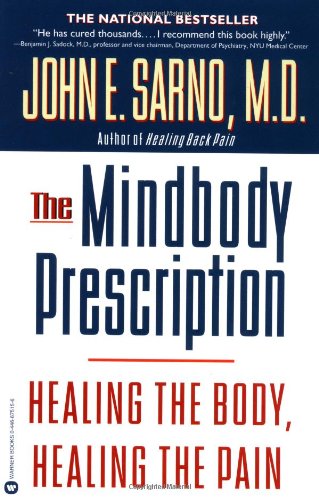
After reading “Explain Pain” by David Butler and “The Mindbody Prescription” by John E. Sarno I began to understand importance of maintaining a calm mind better. I learned that the opposite of a calm mind is an anxious mind. An anxious mind causes tension; think grinding teeth, clenching fists, and upset stomachs. This tension, over time, causes pain. And pain, in turn, causes even more anxiety. It’s a vicious cycle that builds and builds upon itself and, after understanding how it worked, I could finally work on breaking the cycle.
Yoga and Meditation were a good start, but pain isn’t always caused by anxiety. Pain can also be the result of disease or an injury. If you’re lucky a doctor can identify the causation, patch you up, and send you on your way. However, sometimes the path to health isn’t always a straight line.
That’s where prayer helps.
Early on, when I was suffering through Prostatitis, I read “How to Stop Worrying and Start Living” by Dale Carnegie. In it he suggested prayer to help alleviate stress and anxiety. God, he suggested, can help shoulder burdens that can’t be shared with anyone else. I filed Mr. Carnegie’s advice in the back of my mind, but being agnostic, I didn’t take it to heart for several more months. It was only later, after I started coming home from work in pain-induced panic attacks and relying on prescription drugs to help me sleep that, in desperation, I revisited his advice and started praying.
Meet Saint Peregrine, the Patron Saint of Cancer Patients. He keeps me company at my desk every day. Laid out in front of him are a prayer token and a worry stone, these I carry with me all of the time. My mom gave them to me shortly after I was diagnosed.
Prayer has helped me tremendously, particularly after I was diagnosed with Prostate Cancer. Regardless of who or what you believe in – whether it be God, Allah, the Buddah, or the Great Spaghetti Monster in the Sky, it really helps to have someone to talk to about things that can’t be said, to ask questions of that can’t be answered, to ask favors of that can’t be granted, and most importantly, to have faith in, and trust that, in the end, everything is going to be okay.
Our friends, the Cawlfields, invited us to Universal Studios Hollywood to celebrate their son, Allan’s, birthday. It was a lot of fun and a fantastic distraction.
“That was awesome!”, my oldest daughter, Ashley, screamed.
We had just gotten off “Harry Potter and the Hidden Journey” at Universal Studios, Hollywood. We, along with some of our friends, had taken advantage of a teacher “prep” day at Westwood Elementary and braved the 5N to Los Angeles. Traffic was horrendous, there was a five car pileup just past Camp Pendleton that had snarled traffic for over an hour, but we made it. Now we were getting our first taste of what Universal had to offer.
I smiled at her, glanced at my phone, and noticed a message waiting. After listening to the message I squeezed Ashley’s shoulder and quickened my pace to catch up with Jodie.
“Are you okay?, she asked.
“Yup. I just got a call from Dr. Kane’s office. Surgery is set for March 16th at 7:20 AM.”, I told her.
“You sure you’re okay?”
“Yup!”
Then my phone started ringing again. This time it was from BriovaRx, the specialty pharmacy that supplies me with Zytiga, one of the two hormone therapy medications that I’ve been taking. Instead of picking up I let it go to voicemail and put the phone back into my pocket. By then Ashley and Kaylee had caught up with us.
“So, what’s next?”, I asked them.
Their attention was elsewhere. I followed their eyes to a nearby cart with a big sign marked “Butterbeer” on it. Six dollars and ninety-nine cents later we were sharing a cup of the frozen concoction, remarking how it tasted a lot like cream soda.
My phone rang a third time; it was BriovaRx again. I let it go to voicemail, put my phone back into my pocket, took a big chug of the Butterbeer, and smiled.
It tasted better than cream soda.
Surgery is over a month away, today is now. Phone calls and diet be damned, I was going to have fun with my family.
The upside of early morning appointments is that, if you’re lucky, your doctor is on schedule. The downside is that if you live in Southern California you hit traffic, lots of it. As Jodie and I crawled along the 56 West towards La Jolla, we sipped green tea from matching insulated bottles that we had bought from Costco earlier that week. Green tea has become our therapeutic drink of choice lately. I add ginger to mine as I’ve heard it has anticancer properties. Jodie prefers pomegranate.
After parking I walked over to a kiosk, paid for a parking ticket, walked back to the car and slapped it on top of a large stack of prior tickets.
“This is getting expensive”, I told her.
“Did the code work?”
“Nope.”
The “code” in question is a department code that, if you’re lucky, is provided by your doctor for your appointment that grants you free parking. When given such codes I have milked them to expiration. Five dollars per appointment adds up over time.
After arriving at the urology suite in UCSD’s Koman Outpatient Pavilion we were quickly checked in and shown to my exam room.
My eyes immediately focused on a tube of lube resting casually on the exam table.
F*uck.
As soon as the nurse left and closed the door I extricated the tube to the safety of the back of the room, hiding it as best as I could behind the sink faucet. Just in time, too.
Knock! Knock!
Dr. Kane’s resident entered, introduced himself, and quickly rattled off the entire history of my prostate in incredible detail.
“So, we typically do rectal exams for our appointments…”, he said with a smile.
There it is.
Now, at this point in my treatment I’ve had six prior DRE’s, three CT Scans, three MRI’s, a bone scan, and a prostate biopsy. As much as I would enjoy having another finger stu….
“Is another DRE absolutely necessary? Will it help his treatment?”, Jodie asked, interrupting my thoughts.
My wife, through all of this, has been acutely aware of my ever-growing aversion to anything stuck up my ass and has been very vocal in its protection. God bless her.
“No, it’s unlikely. You can choose to defer if you’d like.”, he responded.
Tough choice, right?
After deferring, Dr. Kane’s intern quickly finished up with me and left the room with what I felt was just a hint of dejection.
Dr. Christopher Kane entered a few minutes later. I immediately liked him. He had a kind smile and even though he knew my history, he wanted to hear it from me. After introductions we got down to business.
Dr. Kane told me that, after reviewing my latest CT and MRI scans from last week, he was able to more accurately stage my cancer as T3N1.
Letters, numbers …. wha?
“What does that mean? Is that better?”, I asked hopefully, “My prostate cancer was Stage 4 before.”
Dr. Kane gave me a brief overview of the TNM Staging System. TNM stands for (T)umor, (N)ode, (M)etastasis. The TNM System is used when staging metastasized cancer to describe where it has spread. He told me that my cancer is not clinically localized as it had escaped the prostate. He also reiterated that it is high risk because of the high Gleason grade and high PSA at diagnosis, making it T3. It had also spread to one nearby lymph node, making it N1. If two lymph nodes were involved it would be N2, and so on. Dr. Kane didn’t include an M because there is no evidence of metastasis to other organs or bones.
Next, Dr. Kane told me that the hormone therapy is working. It’s working so well in fact that my latest MRI, performed on January 24th, measured my prostate at 25 cc.
To put it in perspective a normal prostate for a man my age is 25 – 30 cc. The last time it was measured, prior to starting hormone therapy on November 6th, it was 46.6cc. That’s a 46% reduction in size in less than three months! Dr. Kane told me that the smaller size would make surgery easier. He also told me that I could stop taking Flowmax as well.
I have been on Flowmax since April, 2019. It was initially prescribed to me for urinary pain and retention caused by, what my doctors at the time thought, was Prostatitis. Flowmax works by relaxing the muscles of the bladder neck, allowing things to ( for lack of a better term ) “flow” better. I never liked being on the stuff. It worked, but it was one more pill that I had to schedule around meals and came with its own side effects . Then, of course, there was the stigmatism of being on the same prostate medication as men twice my age. Needless to say, I was more than happy to be told I could stop taking it.
“So, now that my prostate is normal-sized and my PSA is in a normal range, what would happen if I stopped hormone therapy?”, I asked out of curiosity.
Dr. Kane told me that hormone therapy is only effective against roughly 90% of prostate cancer cells. If I stopped the hormone therapy, the resistant cancer would keep growing and I’d be right back where I started.
“Your cancer is no longer localized.”, Dr. Kane told me, “In the ‘Old Days’, which were 20 years ago ( chuckles ), once the cancer had left the prostate we’d just do hormone therapy. We didn’t treat it as a curable disease.”
“And now?”, I asked.
“Now we’ve found that when prostate cancer has spread to a nearby lymph node and we treat it with hormone therapy and either radiation or surgery, the cancer can potentially be cured.”, Dr. Kane said.
Boom! So there’s a chance! Dr. Stewart hinted at the possibility. Hearing it from Dr. Kane was even more encouraging.
“We have lots of data on other men with disease similar to yours.”, Dr. Kane said, “The studies indicate that, even though the cancer has spread to a lymph node, it might be cureable. What we don’t have a lot of information on is which local treatment works better with hormone therapy – radiation or surgery.”
Dr. Kane, being a surgeon, proceeded to tell me the benefits of surgery. He started by telling me that his goal wasn’t to sway me either way, but it didn’t matter, I had made up my mind after talking to Dr. Stewart, my oncologist, a few weeks prior.
“With surgery”, Dr. Kane told me, “wephysically remove the tumor and hand it over to the pathologists for further analysis. This analysis will show them exactly where the cancer is and isn’t, how many nodes are involved, how the cancer has responded to hormone therapy and it may help with future treatments as well. Surgery also ‘de-bulks’ the tumor by removing the majority of it, and gives your immune systemand other therapies a better chance at fighting off any residual cells.”
“And”, he said, “we cando radiation later if needed.”
Anticipating my next question Dr. Kane told me that he does 3-4 surgeries per week, totaling around 2,000. His first 500 or 600 were non-robotic, “open” surgeries.
“And”, Jodie asked, “how many men have you operated on that were under 45?”
“I’ve operated on about 100 men under 45; the youngest being 29.”, he replied.
He continued to tell me that during the surgery he will do a lymph node dissection and remove the ones that are most high-risk, probably 45-60 total. The lymph nodes would then be biopsied by pathologists to check for metastasis. He told me that he typically did this for men whose PSA scores were ten or above. I’ve talked about lymph nodes in a prior post. To summarize, lymph nodes are part of our immune system. They help our bodies fight viruses, colds, and diseases – such as cancer.
“Will the removal of these lymph nodes cause any problems? Swelling? Infection?”, I asked.
“No.”, he said flatly, “the human body has hundreds of lymph nodes, many of which are located in the thighs and legs. The remaining lymph nodes will take up the slack. There is, however, an increased chance of blot clots, so we might put you on blood thinners in the hospital”.
“How do you remove the prostate from the urethra? I mean, you can’t just slide it off like a bead on a piece of yarn”, I asked, “they’re kind of attached, right?”.
Dr. Kane then demonstrated with his hands how the urethra is cut and ‘precisely’ sutured back onto the bladder after the prostate is removed. Then, he told me that everything is carefully pressure tested.
“Wait, pressure tested? Like, as in plumbing?”. I interrupted.
“Yes. To check for leaks.”
I hope Dr. Kane is better at plumbing than I am. I had a flashback of one of my first DIY projects, a bathroom renovation. I had just replaced a bunch of shutoff valves and copper pipe. After turning the water back on I casually walked back to the bathroom to find water spraying everywhere and a small lake on the floor.
“Now, let’s talkabout side effects”, Dr. Kane said.
First, he told me that surgery causes temporary urinary incontinence, but the risk for permanent incontinence is very low for a young, healthy patient and an experienced surgeon. Although the incontinence usually resolves itself within 6 weeks, prior to that I’ll probably need to wear a pad, or ( shudder ) diapers. The prostate acts as a very efficient “valve” to the bladder. It’s why men can go longer than women without peeing. Without a prostate, men, like women, need to rely solely upon their pelvic muscles to maintain continence. However, whereas men tend to be more muscular than women, this advantage ends with their underutilized pelvic muscles. Kegel exercises, exercises designed to strengthen the pelvic muscles, help with the incontinence. I have been doing them for the last couple of weeks after my last appointment with Dr. Stewart.
“And then there are the sexual side effects.”, Dr. Kane began.
Here we go…
Dr. Kane told me that the nerve bundle that controls erections is, unfortunately, attached to the prostate. Removing the prostate and sparing the nerve bundle is tricky and not always possible.
“After your surgery, when you take a break from hormone therapy, we can talk about injections and medications to help with erections,” he told me.
My brain quickly visualized where said injections might be administered and urgently wanted to switch to a different topic.
“Look, I just want to live. Right now erections are the furthest from my mind. I’m more concerned with wearing diapers for the rest of my life. Does the nerve bundle also control incontinence?”, I interrupted.
“No, the nerves that control your bladder will remain intact. You might change your mind about sex once this cancer is behind you…”
Behind me. Strong, reassuring words – I was really beginning to like this guy! However, for this “Casanova”, the thought of popping libido pills and whipping out a syringe during sex were concerns for another day. If I can’t control my own bladder I sure as hell wasn’t going to be interested in sex.
So, what is the recovery like after surgery?”, I asked in an attempt to change topics.
The recovery wasn’t as bad as I imagined. As usual I “primed” my expectations by scouring the internet for articles and forum posts. Dr. Kane burst these expectations one by one like the overinflated balloons that they were. He told me that I would need to stay overnight in the hospital. A catheter would be inserted and would have to stay there for one, maybe two weeks. He said that it could come outas early as three days, but swelling would make it difficult to pee. He told me that I’d be up and walking after surgery. After two weeks I could resume yoga and using elliptical exercise machines. Weight lifting, however, would have to wait at least six weeks. Bad, but not nearly as bad as I had read.
The restrictions on weight lifting was my biggest concern. One of the side effects of hormone therapy is a reduction in muscle and bone mass. I’ve been told by multiple doctors and nurses how important weight lifting is in order to counteract its effects. A six weeks hiatus is long, but still shorter than the two to four months than I read about on the Internet.
“Do you have any experience with your patients using Pulsed Electromagnetic Field Therapy before or after surgery to help with healing?”, Jodie asked.The therapy, also known as PEMF, has helped our friend, Lora, with her back pain tremendously. I was curious, too. When I was suffering from Prostatitis I had read several articles on how PEMF reduces inflammation.
“I have patients that have tried it and I don’t know how much it helped but if you want totry it go ahead.”, he said.
Finishing up he said, “The goal is to remove all of the cancer or at least 99% of it, which would give the immune system a fighting chance.”
And that’s really it, right? Our immune systems are responsible for keeping cancer in check. Everyone has cancer cells at some point, it’s up to the immune system to step up and kill off the cancer cells before they become a tumor. My immune system was apparently not up to the task. This failure is one of the reasons why I advocate a plant-based, low-sugar diet. In addition to the health benefits, I wanted to give my immune system the best “tools” for the job. It’s also one of the reasons why I’ve worked on reducing the amount of stress and anxiety in my life through exercise and meditation. The fact of the matter is, if hormone therapy and surgery leave even a speck of cancer alive in my system, I want my immune system to be in the best shape possible to stop it.
Dr. Kane struck me as experienced and confident, two qualities that you want in a person who will be responsible for tearing out your manhood. While he was getting up to leave to see his next patient I asked him one more thing.
“Dr. Kane. Before you go, can you hold your right hand out in front of you, palm down”
He looked at me with a puzzled look, but complied.
I waited ten seconds before responding.
“Good. Nice and steady. You’ll do fine!”, I said chuckling, “Thank you for meeting with my wife and I today”.
He smiled, gave a slight laugh, and told me to expect a call from his scheduler.
I guess the only thing left to do now, is wait and, well … kegels. Sh*t, I can’t believe I just wrote that.















 drawnandcoded.com